Home / Research
PrecisionClarityConfidence

New research, read so you don't have to.

One email a week. Unsubscribe any time.

Issue 01 · November 2026 — each paper: Takeaway · Why it matters · Worth reading · Limits How we choose ↓
Issue 01 November 2026

Viticulture

Back to contents ↑
Soil & water

Soil-driven variability in grapevine water uptake depth across seven soil types in Marlborough, New Zealand

Ruiz et al. · OENO One · 30 October 2026 · Paper / DOI

  • Takeaway: Isotope measurements showed large differences in water-uptake depth between vineyard soils. Compacted layers restricted access to deeper water at some sites (Renwick drew ~70% from 20–50 cm above a dense layer at ~50 cm); others supported uptake across the profile or mainly from depth (Hinds and Temuka up to ~70% from below 30 cm).
  • Why it matters: For Central Otago, the practical implication is to match irrigation and soil-moisture monitoring depths to each block’s soil profile. A shallow sensor alone may poorly represent the water vines actually access, and frequent shallow irrigation is likely wasted where vines are drawing from depth.
  • Worth reading: Figure 5, the depth-by-depth uptake heatmaps paired with each soil profile; Figure 3, for spotting compaction layers; and Table 2, which translates the findings into soil-specific management responses.
  • Limits: Seven sites, one season (2024–25, warmer than average), generally low vine water stress. Soil, cultivar and rootstock effects could not be separated, and augers could not sample below ~50–70 cm at two sites. The irrigation recommendations are informed proposals, not demonstrated water savings or fruit-quality gains. This supports established site-specific irrigation principles; isotope-based diagnosis remains a specialist research tool.
Canopy & aroma

Water deficit and leaf removal have interacting effects on the terpenoid composition of ‘Riesling’ grapes

Friedel et al. · OENO One · 3 November 2026 · Paper / DOI

  • Takeaway: Water deficit raised monoterpenes and C13-norisoprenoids in Riesling by about as much as bunch-zone leaf removal did (unirrigated vines had up to 88% more free monoterpenes). The two don’t stack: leaf removal helped well-watered vines but added little once vines were already stressed. The lag phase before veraison was the most sensitive window.
  • Why it matters: For aromatic whites here, a measured pre-veraison deficit may do part of the leaf-pluck’s job with less sunburn exposure, and leaf removal on vines already under deficit may cost labour without much aroma return. Timing and canopy side matter more than doing both.
  • Worth reading: Table 1 and Figure 2 for the drought × leaf-removal interaction; Figure 4 for which part of the season is most sensitive to water status.
  • Limits: One cultivar, two sites (four seasons in Germany, one in Washington State), irrigation contrast in only one year at the main site, modelled water potential in part of the data and small replicate numbers. Berry size and aroma concentration are partly confounded, only one vintage was made into wine, and the text and Table 2 don’t fully agree for the US trial.
Spray programmes

On-farm experimentation to reduce pesticide use in viticulture: evidence from Southwestern France

Perez et al. · OENO One · 28 October 2026 · Paper / DOI

  • Takeaway: Nineteen growers ran co-designed reduced-fungicide strategies alongside their usual programme. Integrated management (decision-support timing) cut treatment frequency by ~18% against growers’ own practice and the zero-residue strategy by ~30%, mostly holding disease control and lowering fungicide cost. Biocontrol-only cut sprays by ~81% but gave unreliable control and cost more.
  • Why it matters: Spray reduction is achievable without big yield risk when it’s driven by disease-model timing and tested on your own blocks first. The approach — start on 5–10% of the vineyard as a side-by-side block — is directly usable here, whatever the target product list.
  • Worth reading: Figure 5 (yield loss vs spray reduction, with the “win-win” zone) and Figure 6 (cost vs spray reduction); Table 5 for disease intensity by strategy.
  • Limits: Two contrasting seasons pooled, uneven and small samples (only two biocontrol-only growers), fungicides only, labour not measured, one variety per appellation. The paper reports some figures inconsistently between sections, so check numbers against the tables.
Hail nets

Anti-hail net colour and installation system impacts on vegetative growth, yield and berry composition (cv. Malbec)

Nahüel et al. · OENO One · 29 October 2026 · Paper / DOI

  • Takeaway: Over three seasons in Mendoza, black nets increased vine growth and, with the close-fitting Grembiule system, gave ~15% more yield than pearl nets. Black-netted fruit had higher TA and lower pH at the same sugar; pearl nets gave more sugar. Grembiule raised anthocyanins by ~48% over uncovered vines, while the overhead “Modified” system ran hotter in the afternoon.
  • Why it matters: If you’re pricing hail netting, colour and how it’s hung are fruit-composition decisions, not just protection. In a cooler, wetter climate the extra vigour under black nets is the thing to watch.
  • Worth reading: Table 3 (yield components and Ravaz index by system), Table 4 (acidity, pH and phenolics) and Figure 4, which shows the acid difference holds at equal °Brix.
  • Limits: One site, one own-rooted cultivar, three warm, arid seasons; all treatments picked on the same day; sunburn not assessed; the uncovered control lost its 2020–21 crop to hail. Transfer to Central Otago conditions is untested.
Soil biology

Impact of biodynamic preparations on soil properties suggests enhanced microbial community diversity in vineyards in Bordeaux, France

Organic Agriculture · 24 October 2026 · Paper / DOI

  • Takeaway: A six-year trial at Château Lafite Rothschild compared organic plots with and without biodynamic preparations. Treated plots showed higher basal soil respiration (~40%) and microbial biomass carbon (~34%), with indications of greater microbial functional diversity.
  • Why it matters: It’s one of the better-controlled datasets on biodynamic preparations, but it measures soil biological activity — not vine performance, fruit or wine. Useful context if you’re weighing biodynamic conversion; not evidence of a quality outcome.
  • Worth reading: The microbial functional diversity results and the correlations between microbial and general soil properties.
  • Limits: One estate and soil type. Yield and wine quality were not assessed, and respiration and diversity are proxies, not outcomes. We could not access the full text; this synopsis is based on the abstract and secondary reporting, so treat the figures as indicative and check the paper.
Yield forecasting

Ultra-early yield potential in viticulture by forcing the budbreak of dormant buds

Moreira et al. · OENO One · 16 October 2026 · Paper / DOI

  • Takeaway: Forcing dormant buds in the lab predicted inflorescences per vine closely (R² 0.72–0.86, error ~1.3–1.7 per vine). The link to harvest bunch numbers was weaker (R² 0.34–0.44), mostly because of what happens between flowering and harvest.
  • Why it matters: Bud fruitfulness is known in winter, in time to set pruning severity and bud load. It’s a cheap way to tell a light year from a normal one before you prune, rather than a yield forecast.
  • Worth reading: Table 3 (predicted vs observed counts and agreement statistics) and Table 4 (how well early estimates carried through to harvest bunches).
  • Limits: One plot in Portugal’s Dão, three seasons of one cultivar and one of another; only basal bud positions; harvest validation on a subsample of one cultivar. Yield estimates rely on a fixed bunch weight and are a proof of concept. Validate locally before relying on it.
Remote sensing

Assessing the feasibility of up-scaling grapevine physiological trait estimation using multispectral UAV imagery

Lutz et al. · Scientific Reports · 20 October 2026 · Paper / DOI

  • Takeaway: Drone multispectral models estimated photosynthesis, electron transport and PSII efficiency with useful accuracy within one flight campaign (R² ~0.77–0.90). Shaded or mixed canopy pixels worked better than sunlit ones for photosynthesis. Models held up on unseen vines but failed on unseen dates.
  • Why it matters: Drone “vine physiology” maps aren’t yet a plug-and-play tool. They may help show patterns across a block on the day you fly, but they need calibrating each time and ground measurements to back them.
  • Worth reading: Table 2 (drone results by canopy extraction method) and the supplementary leave-one-date-out results, which are the honest test of whether a model transfers.
  • Limits: One vineyard, one cultivar (Müller-Thurgau), 36 vines, five midday flights in one season. Inter-year and inter-date transfer was poor.
Microbiome

Fifty fundamental questions to unlock the grapevine microbiome for sustainable viticulture

Ochoa-Hueso et al. · Plant and Soil · 20 October 2026 · Paper / DOI

  • Takeaway: Forty-four researchers condensed the field into 50 open questions across nine themes, from soil ecology and holobiont assembly to microbial product viability and practical implementation. The core message: most evidence linking microbes to fruit and wine is observational and confounded by site, climate, cultivar and management.
  • Why it matters: If you’re being sold a microbial or “microbiome” product, these are the questions to ask. The science points to management shaping soil and vine microbes, but proven, repeatable interventions are still thin on the ground.
  • Worth reading: The question list itself, especially the sections on microbial product viability and implementation.
  • Limits: An expert-opinion research agenda, not new data. We could not access the full text; this synopsis is based on the abstract and published summaries.
Issue 01 November 2026

Wine chemistry & microbiology

Redox

Model solution studies informing interpretation of wine redox potentials according to a mixed potential model

Suva, Yang & Kilmartin · ACS Food Science & Technology · 30 October 2026 · Paper / DOI

  • Takeaway: From the University of Auckland group that argued the potential read on a platinum electrode in wine is a mixed potential — driven mainly by ethanol oxidation coupled with oxygen reduction — rather than a true redox equilibrium. This paper uses model solutions to test how individual wine components shift that reading.
  • Why it matters: If you use an ORP probe on ferments or in the cellar, the number reflects oxygen exposure and a mix of reactions at the electrode, not a simple “how reduced is this wine” score. Trend it within a wine rather than comparing absolute values between wines.
  • Worth reading: The model-solution results showing which components move the measured potential, alongside the group’s 2019 paper that set out the mixed-potential argument.
  • Limits: Model solutions, not wines. We could not access the full text; this synopsis draws on the abstract, author summary and the group’s earlier work, so check the paper for specifics.
Process control

Process analytical technology and soft sensing for food fermentation: measurement modalities, analytical validation and generalisation

Hua et al. · Journal of Food Measurement and Characterization · 17 October 2026 · Paper / DOI

  • Takeaway: A review of in-line and at-line measurement for fermentations (spectroscopy, imaging, volatiles, fluorescence, electrochemical and physical sensors) and the “soft sensors” that turn those signals into estimates of sugar, biomass or alcohol. Its focus is validation and whether models transfer to new batches.
  • Why it matters: Tank-mounted sensors that promise continuous Brix or alcohol are only as good as their calibration on your musts. Ask how the model was validated and whether it was tested on ferments it wasn’t trained on — and keep a lab check in the loop.
  • Worth reading: The sections on analytical validation and generalisation.
  • Limits: A broad food-fermentation review, not wine-specific. We could not access the full text; this synopsis is based on the abstract.
Aroma

Quantitative mining of wine aroma literature data for specification reuse

Food Chemistry: X · 2026 · Paper / DOI

  • Takeaway: Pulls quantitative aroma-compound data scattered across the wine literature into a structured, reusable form, so concentrations and odour thresholds from different studies can be compared rather than re-derived.
  • Why it matters: Mainly a resource for aroma and sensory-chemistry work. Useful if you’re interpreting volatile results or setting specifications for a style; less so day to day in the cellar.
  • Worth reading: The compiled data tables, once you can access them.
  • Limits: We could not access the full text or confirm authors and publication date; this synopsis is based on the title and abstract only.
Yeast

Indigenous yeasts from a Maceratino vineyard: sequential fermentation as a strategy to enhance wine complexity

Moretti et al. · Foods · 18 October 2026 · Paper / DOI

  • Takeaway: Wild yeasts from an organic Italian vineyard, screened and used in sequential ferments (non-Saccharomyces first, local S. cerevisiae at 72 h). Lachancea thermotolerans produced ~2.2 g/L lactic acid with more isoamyl acetate and phenylethanol; Metschnikowia pulcherrima lifted esters and tropical notes.
  • Why it matters: Biological acidification with Lachancea is one of the more practical uses of non-Saccharomyces yeast in warm, low-acid seasons. Commercial strains exist; this adds evidence that local isolates can do the same job.
  • Worth reading: Table 3 (acids and residual sugar in the sequential wines) and Table 4 with Figure 4 (volatiles and the PCA).
  • Limits: One vineyard, one vintage, 750 mL lab ferments with two biological replicates, eight-person tasting panel. The authors call it a working hypothesis needing multi-vintage, pilot-scale validation.
MLF

Mannoprotein addition and malolactic fermentation by Oenococcus oeni across two vintages

Toraño et al. · OENO One · 17 September 2026 · Paper / DOI

  • Takeaway: Adding commercial mannoprotein extracts to Tempranillo before inoculating O. oeni shortened MLF by a few days (17 to 14 days in 2022), and the bacteria consumed the mannoproteins. pH and colour were largely unchanged; VA rose slightly in one year.
  • Why it matters: A low dose (0.25 g/L) was enough, so if MLF is slow in a wine that’s hard on bacteria, a mannoprotein product is a reasonable thing to trial. Don’t expect a large effect in wines that aren’t stressful for the culture.
  • Worth reading: Figure 1 (MLF kinetics), Figure 2 (mannoprotein consumption by extract) and Table 2 (end-of-MLF chemistry).
  • Limits: One strain, one variety, small vessels, different doses each year. Colour data only at 0.5 g/L, and the abstract and results disagree on vitisins. Benefits under harsher conditions (low pH, high SO₂ or alcohol) were not tested.
Microbial terroir

Region-associated microbial signatures persist during inoculated fermentation of Nebbiolo grapes

Cristetti et al. · Applied and Environmental Microbiology · 2026 · Paper / DOI

  • Takeaway: Nebbiolo from 38 vineyards across three regions in northern Italy was fermented identically with the same commercial yeast. Regional microbial differences were present at crush and remained detectable through fermentation, and were associated with differences in fermentation chemistry and aroma compounds.
  • Why it matters: “We inoculate, so vineyard microbes don’t matter” doesn’t hold. Vineyard hygiene, fruit condition and management are shaping ferments even with a commercial yeast — and they’re part of what makes a region’s wines distinct.
  • Worth reading: The comparison of fungal communities at crush and through fermentation, and the associations with volatile compounds.
  • Limits: One variety, one vintage, small-scale ferments; associations, not cause and effect. We could not access the full text; this synopsis is based on the abstract and published summaries.
No/low alcohol

Microbiological stability of dealcoholised red wines

González Arenzana et al. · Enoforum Spain 2026 (conference abstract) · 28 August 2026 · Abstract

  • Takeaway: Industrially dealcoholised reds, with and without SO₂, were followed for six months alongside their alcoholic counterparts and finished commercial products. Without ethanol, microbes survived and grew far more readily, even with SO₂, and the wines carried a wide range of organisms. Commercially stabilised products were safest.
  • Why it matters: If you’re making or contracting no/low-alcohol wine, treat it as a food product: a proper hazard plan, tighter hygiene, a microbial stabilisation step and a stated shelf life. Routine micro testing belongs in the release check.
  • Worth reading: The abstract is short; the conference recording will add the data when it’s released.
  • Limits: A conference abstract with no numbers reported — microbial counts, SO₂ levels and organisms are not given. Treat as a flag, not a protocol.
Ageing

Integrating cyclic voltammetry and stepwise regression to explore wine evolution during bottle ageing

Comuzzo et al. · Enoforum Spain 2026 (conference abstract) · 28 August 2026 · Abstract

  • Takeaway: Thirty-six white wines were tracked for 12 months in bottle with cyclic voltammetry alongside 77 other measurements. Up to 13 points on the voltammogram at two months predicted many 12-month parameters, with flavanols predicted best.
  • Why it matters: Points towards a quick electrochemical scan at bottling that could help choose a stabilisation strategy and estimate shelf life. Not ready for routine use, but one to watch.
  • Worth reading: The abstract; prediction accuracy isn’t reported, so wait for the full paper.
  • Limits: Conference abstract, 36 wines, stepwise regression only, no accuracy statistics reported.
How this works

How we choose, and how we read them.

We pick recently published, peer-reviewed or industry-body research for its practical relevance to growers and winemakers here, rather than for novelty. Each paper gets the same four-part synopsis, written by us:

  • Takeaway — what the study found, with the numbers that matter.
  • Why it matters — what it could mean in a Central Otago vineyard or cellar.
  • Worth reading — the figures or tables to go straight to if you open the paper.
  • Limits — sites, seasons, design and anything that doesn't add up, so you can judge how far to trust it.

Every entry links to the source. Conference abstracts are labelled as such. Where we couldn't read the full paper, the Limits line says so and the synopsis is based on the abstract and published summaries. Read the paper before you change practice.

We cover wine microbiology and spoilage; fermentation and yeast nutrition; wine chemistry, stability and analytical methods; vine physiology, disease and canopy; soil, organic and regenerative viticulture; and climate, frost and seasonal risk.

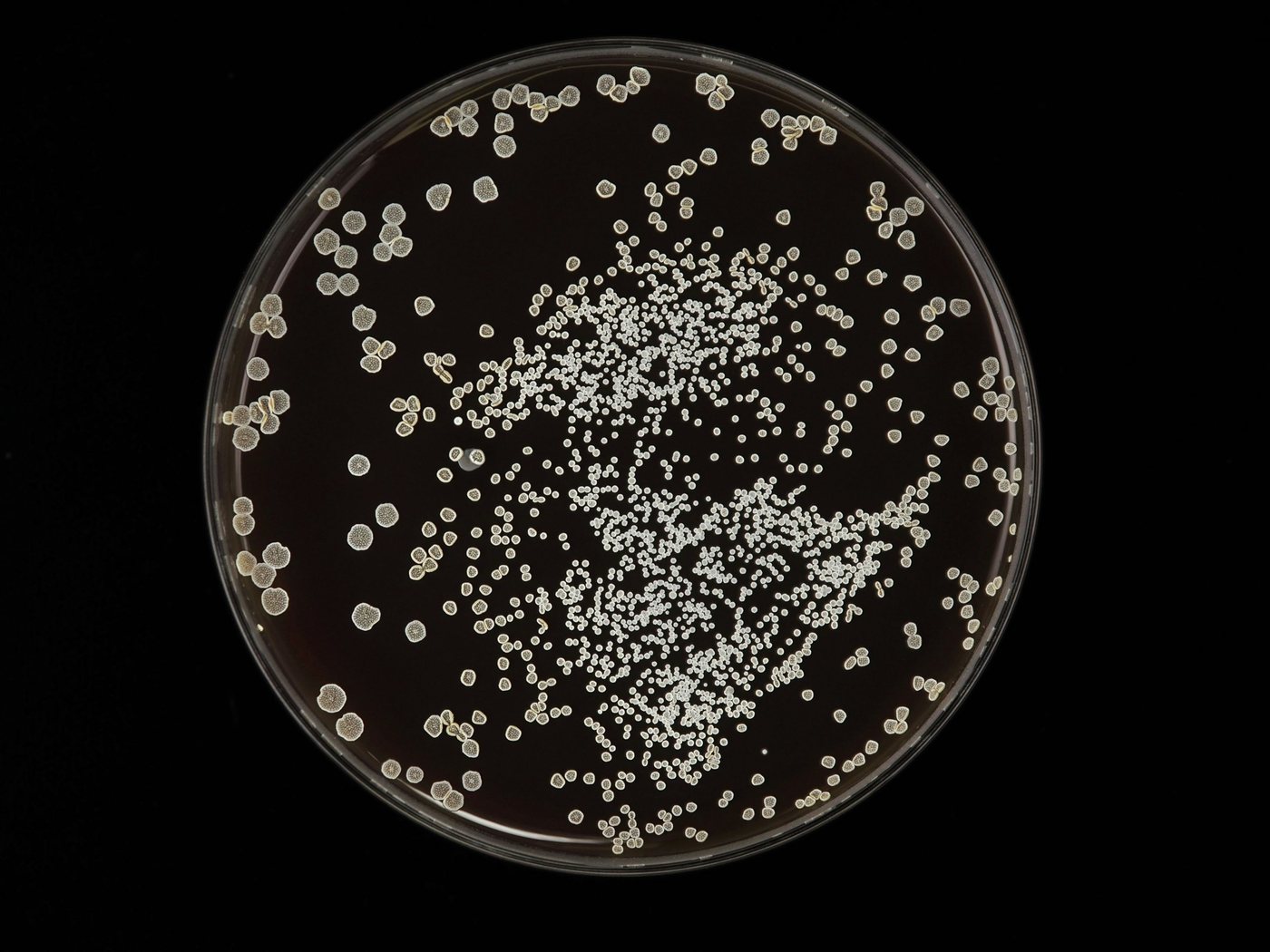
Yeast colonies growing on an agar plate